
✅ Quick Answer
Skip the reading and check current pricing:
Updated April 28, 2026 — re-tested and re-priced for 2026 model-year shoppers.
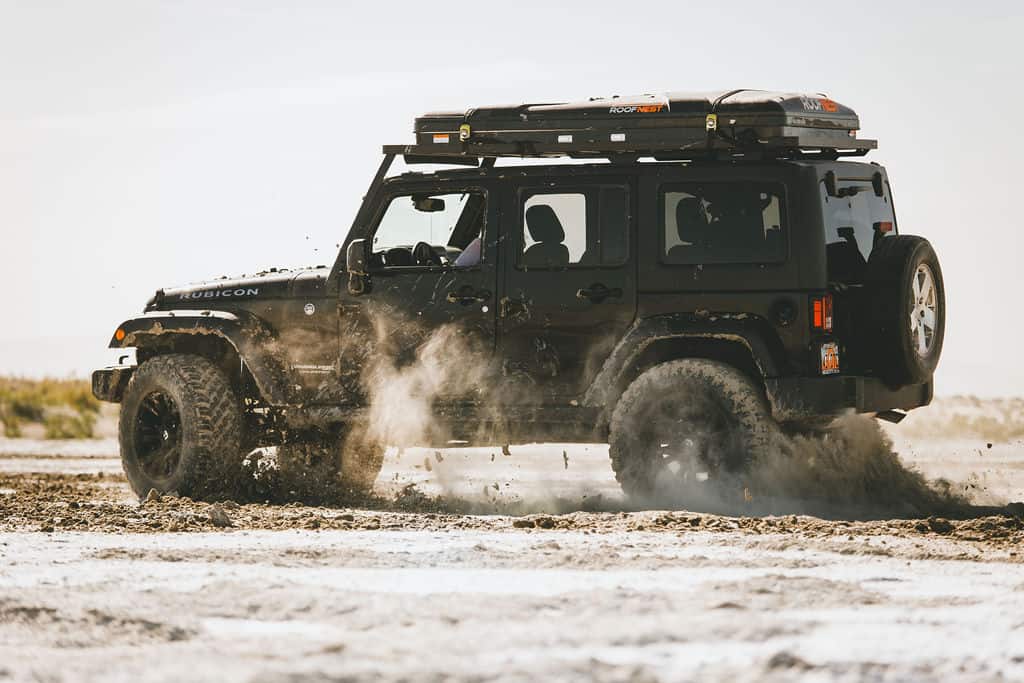
Quick Answer Box (Top Picks)
If you don’t want to read 3,000 words, here’s the short version:
| Best for | Pick | Why | Price | Buy |
|---|---|---|---|---|
| Best overall | Front Runner Slimline II Extreme (JK 4-door) | Bombproof, accessory ecosystem, made for rooftop tents and heavy expedition gear | $2,499 | Yakima RibCage + LockNLoad Pla Pioneer 6 Platform with the JK |
| Best removable | Yakima RibCage + LockNLoad Platform | Tracks bolt to factory hardpoints, with 14 drilled bolt holes for the rails (per Yakima’s install instructions). Comes off cleanly when you sell the Jeep — holes are small and easily plugged. | ~$1,400 combined | Yakima RibCage + LockNLoad Pla |
| Best mid-tier | Rhino-Rack Pioneer 6 Platform + JK Backbone | More cargo capacity than Yakima, less commitment than Front Runner | $1,379 | Yakima RibCage + LockNLoad Pla Pioneer 6 Platform with the JK |
| Best budget (light cargo only) | Hooke Road JK Cargo Basket | Cheap, JK-specific fit. Not for rooftop tents. | $330 | Yakima RibCage + LockNLoad Pla Pioneer 6 Platform with the JK |
Top recommendation: Front Runner Slimline II Extreme. We’ve run one for 6 years, and it’s still the rack we’d buy again tomorrow.
I’m Michael. I run UT Overland — and I’ve actually lived with these racks.
If you’re researching roof racks for your Jeep Wrangler JK, you’ve probably already realized something most buyer’s guides don’t tell you: most of them are written by people who have never installed a roof rack on a Jeep. They pull spec sheets from Amazon, slap together a comparison table, and call it a day.
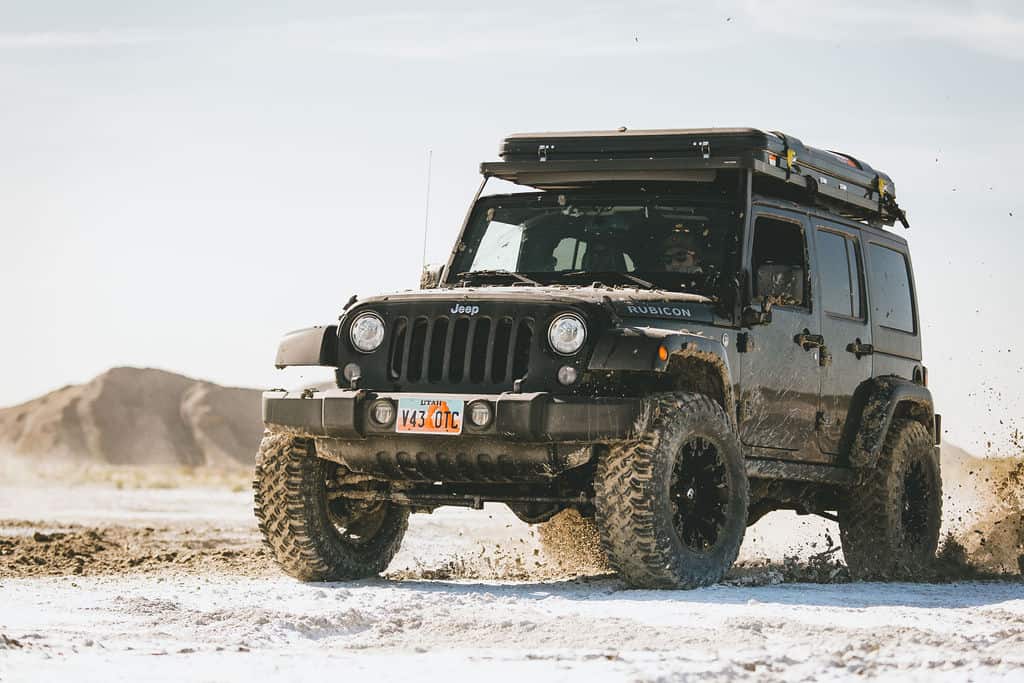
I run UT Overland, an overland Jeep rental business in Draper, Utah. Our flagship rental is a 2018 Jeep Wrangler Unlimited Rubicon JK. It has a Front Runner Slimline II Extreme rack on it. It’s been on the Jeep since 2018. It has been driven by dozens of customers. It has held a rooftop tent, kayaks, snowboards, recovery boards, fuel cans, and roughly 800 pounds of “stuff most people probably shouldn’t put on a roof.” It’s still rock-solid.
That’s the lens I’m bringing to this guide. I’m going to tell you which rack I run, why I picked it, what the realistic alternatives are at every price point, and which option to actually buy based on what you want to do with your Jeep.
If you’re carrying a rooftop tent, you have one good answer and three okay answers. If you’re carrying a kayak twice a year, you have a totally different best answer. The whole point of this guide is to help you figure out which one applies to you.
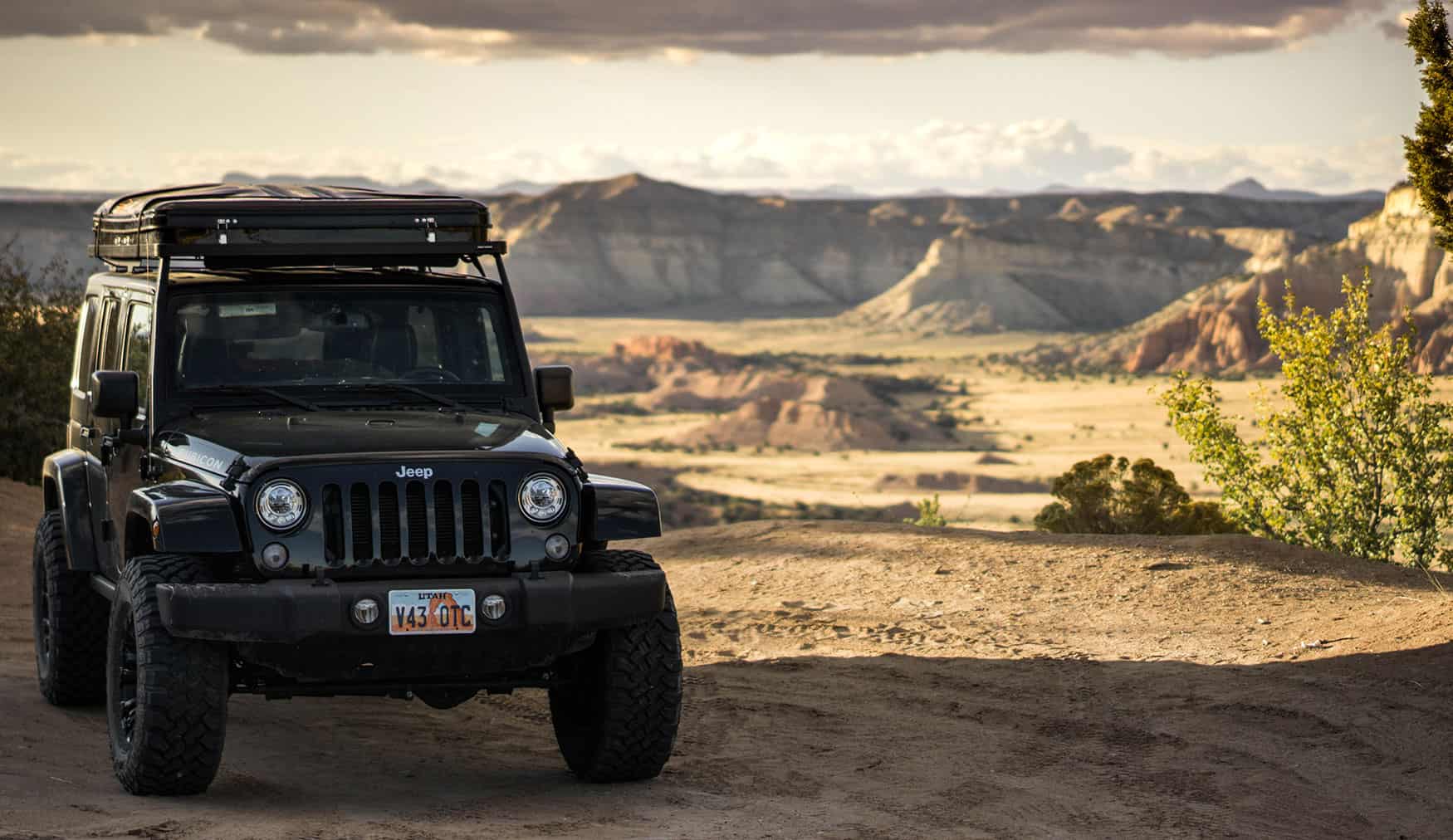
What to look for in a Jeep Wrangler JK roof rack
Before getting into specific picks, here’s the criteria that actually matter when you’re shopping. Most product pages and Amazon listings don’t lay this out, so it’s worth knowing what to ask:
1. Static vs. dynamic weight capacity. Roof racks have two different weight ratings. Static weight is what the rack can hold when the Jeep is parked (relevant for rooftop tents, which can hold 600+ pounds of sleeping people). Dynamic weight is what it can hold while driving (much lower — typically a quarter to a third of the static rating). A budget rack that says “300 lb capacity” is almost certainly the static rating. The dynamic rating is what determines whether you can put a kayak on it on the highway.
2. Mounting method: drill or no-drill. This is the single biggest decision. Drilling holes in your hardtop is permanent, but it gives you the strongest mount and works regardless of soft top vs. hardtop. No-drill systems mount to factory hardtop hardpoints, which means you can take the rack off and sell the Jeep without explaining the holes — but you give up some load capacity, and they only work on hardtops.
3. Soft top vs. hardtop compatibility. This catches people off guard. Yakima RibCage and Rhino-Rack JK Backbone both bolt to the factory hardtop. Front Runner’s Slimline II works with the hardtop OR with no roof at all (Freedom Panels removed) — but the front feet bolt into the freedom panel area, so it does not work with a soft top in place. If you run soft top year-round, all four of these full racks are out — your options are roll-bar-mounted baskets or sport bars.
4. Materials and rust. Aluminum is lighter, doesn’t rust, and is what every premium rack uses. Powder-coated steel is cheaper but rusts at every drill hole and edge over time, especially in salty winter climates.
5. Accessory ecosystem. This sounds like marketing fluff but it’s huge in practice. Front Runner has hundreds of bolt-on accessories (tables, tent mounts, awning brackets, jerry can holders) designed for the Slimline II’s slot pattern. Cage-style racks have basically zero accessory ecosystem — you’re zip-tying everything.
6. Wind noise. Bigger, taller racks make more noise on the highway. The Front Runner Slimline II is among the quietest because of its low profile. Cage-style racks, with their cross-bars catching wind, are the loudest. If you commute in your Jeep, this matters.
7. Price and resale. Front Runner racks hold their value remarkably well on the used market — I’ve seen 5-year-old setups sell for 60-70% of original price. Generic cage-style racks have basically no resale value.
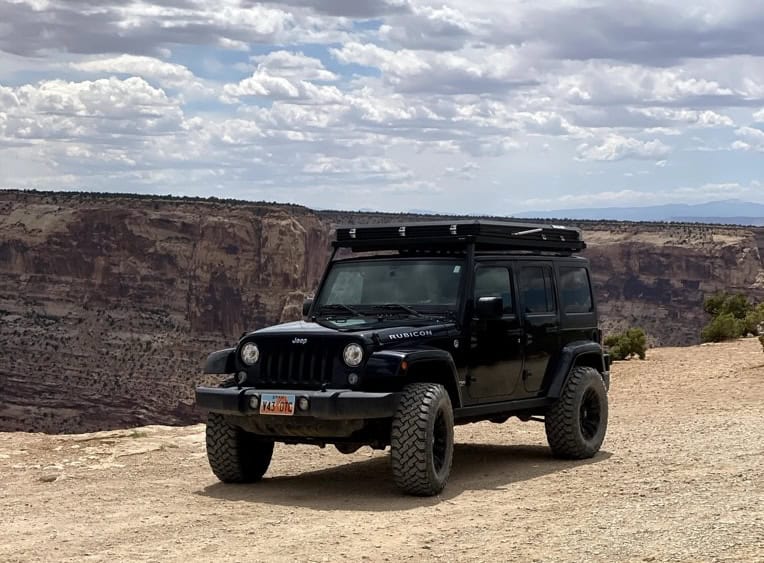
Comparison table
| Front Runner Slimline II Extreme | Yakima RibCage + LockNLoad | Rhino-Rack Pioneer 6 + JK Backbone | Hooke Road JK Cargo Basket | |
|---|---|---|---|---|
| Price | $2,499 | ~$1,400 combined | $1,379 | $329 |
| Static weight | 660 lbs | 600 lbs | 660 lbs | ~150 lbs |
| Dynamic weight | 220 lbs | 165 lbs | 220 lbs | ~75 lbs |
| Drill required | Yes | No | Minimal | No (bolts to hardtop) |
| Soft top OK | Yes | No | No | No |
| Material | Aluminum | Aluminum | Aluminum | Powder-coated steel |
| Accessory ecosystem | Best in class (200+) | Good (40+) | Good (50+) | None |
| Best for | Rooftop tent + expedition build | No-drill renters/lessees | Mid-budget hardtop owners | Light cargo, occasional use |
| Buy | Check Price | Check Price | Check Price | Check Price |
Our top pick: Front Runner Slimline II Extreme (JK 4-door)
Price: $2,499 (full-length kit)
This is the rack on my Jeep. It has been on my Jeep for six years. I have no plans to take it off.
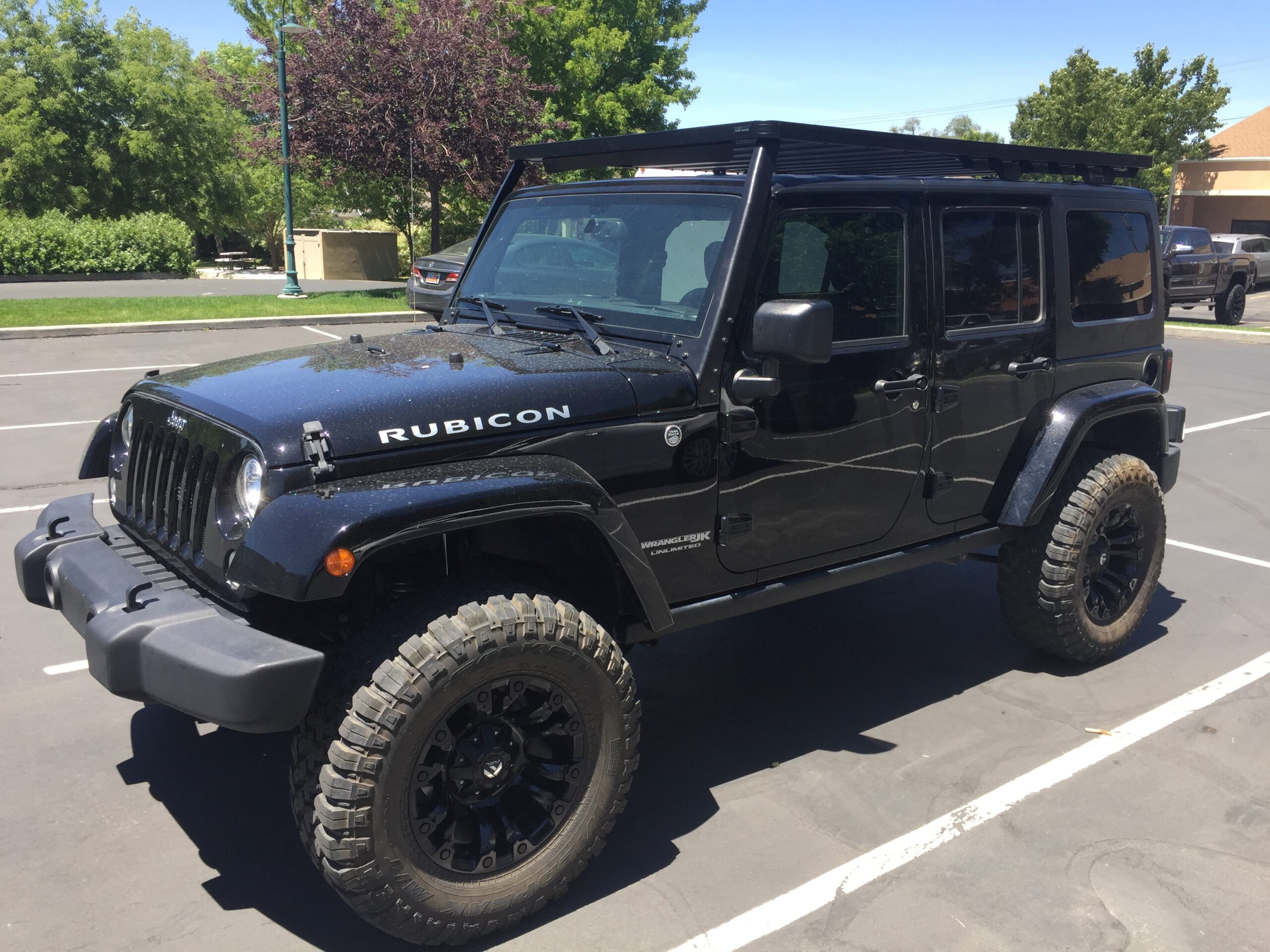
The Slimline II Extreme is a bolt-on aluminum platform that mounts to the JK hardtop using a vehicle-specific bracket kit. The “Extreme” designation means the rack sits 4-5 inches above the roof rather than flush — that extra clearance lets you fit a rooftop tent, an awning, and a fuel can mount on top of the rack without anything touching the roof.
Why I picked it
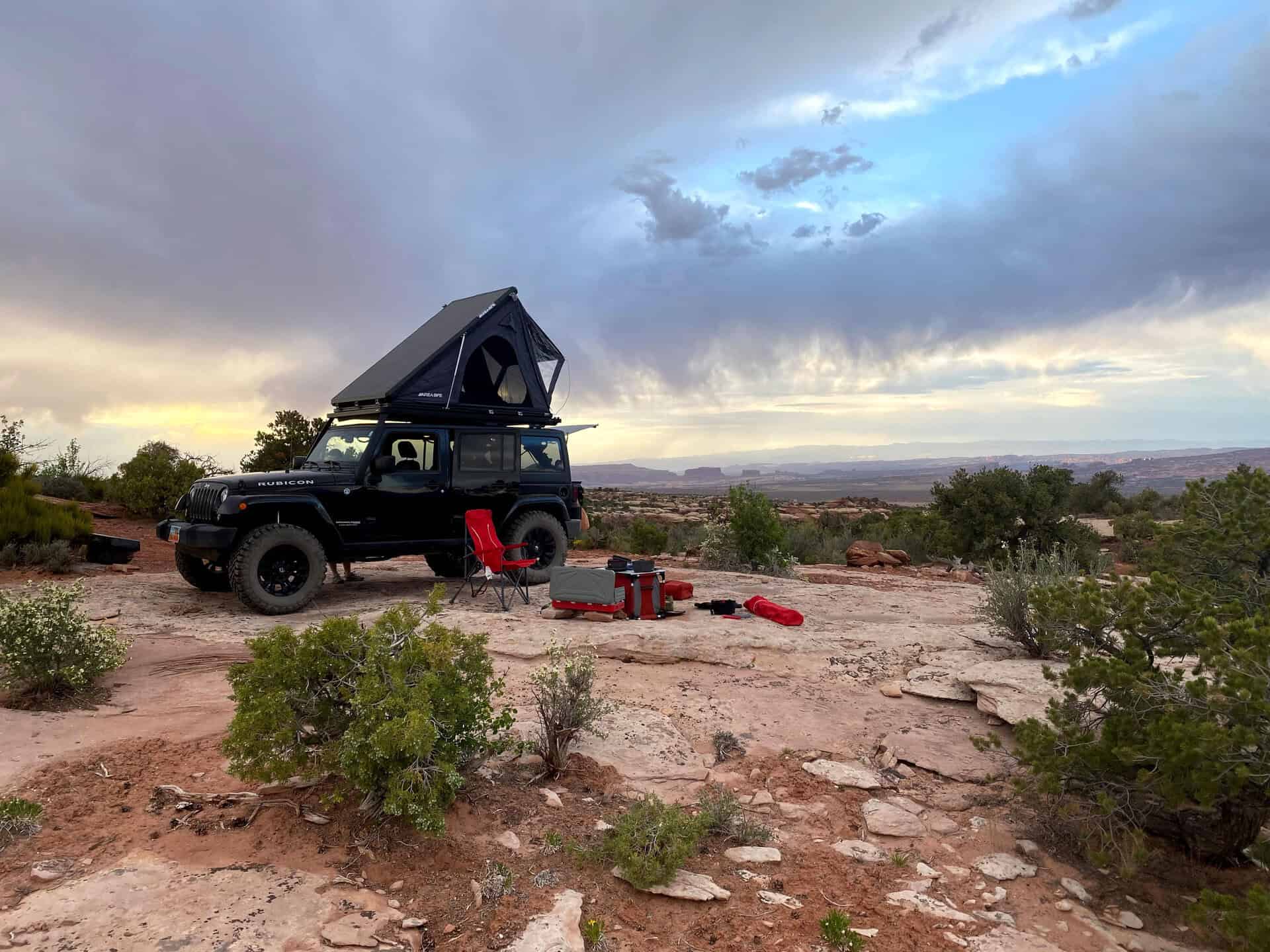
When I bought the Jeep in 2018, I knew I wanted to put a rooftop tent on it eventually. That meant I needed a rack with a real static weight rating (the rack and the tent and two sleeping people) and a real dynamic weight rating (driving down a forest road with the tent up there). The Slimline II Extreme rates 660 lb static and 220 lb dynamic — enough headroom that I never have to think about it.
The other thing that sold me was the accessory ecosystem. Front Runner makes a stainless steel table that bolts directly into the rack’s slot pattern, an awning bracket that fits without modification, jerry can holders, recovery board mounts, a folding ladder. I add accessories every year and they all just bolt on. With a cage-style rack, every accessory is a custom strap-and-zip-tie job.
What it’s like to live with
The wind noise is real but minor. On the highway at 70+ mph there’s a low whoosh you stop noticing after a week. Gas mileage on my JK Rubicon dropped roughly 1 MPG (from 16 to 15) — measurable but not enough that it changes how I drive.
Installation took me about three hours the first time. There’s drilling involved — six holes through the hardtop. That sounds scary but it’s a 30-second job per hole if you have a step bit, and the brackets are sealed against water with the rubber gaskets included. I wrote a separate post about drilling the holes without losing your nerve — read that if you’re hesitant.
After six years and dozens of rentals, the rack has zero rust, zero loose bolts, and zero issues. The rubber gaskets around the bracket holes have done their job — no water leaks into the cab.
Front Runner literally lifts an entire Jeep into the air by the rack. That’s the build quality I’m talking about.
If you want to see Front Runner’s own breakdown of the Slimline II’s design and load capabilities, this is their product overview:
Who should NOT buy it
Two scenarios where Front Runner is the wrong call:
- You don’t want to drill. Six holes through the hardtop is a permanent commitment. If you’re leasing your Jeep or planning to sell within a year, the Yakima is a better answer.
- You only carry stuff on the rack twice a year. Spending $2,500 to put a kayak up there twice a summer is overkill. Get the Hooke Road for $330 and call it good.
If neither of those is you, this is the rack to buy.
Runner-up: Yakima RibCage + LockNLoad Platform
The Yakima RibCage is a JK-specific track system that bolts to your hardtop’s factory points — no drilling required. The LockNLoad Platform is the actual cargo platform that mounts on top of the RibCage tracks. You need both for a complete setup.
Price: ~$1,400 combined (RibCage tracks ~$600 + LockNLoad platform ~$800)
Why this is the right call for some people
The single biggest reason to pick Yakima over Front Runner is reversibility. The RibCage rails bolt to the hardtop’s factory hardpoints, and the LockNLoad tracks add 14 small drilled holes in the roof for the rail mounts (per Yakima’s install instructions). If you sell the Jeep or swap to a soft top in summer, the rack and tracks come off in about 20 minutes — the holes left behind are small, sealed with included grommets, and most buyers won’t notice. That’s a real value proposition for anyone leasing, anyone with resale anxiety, or anyone who switches between hardtop and soft top seasonally.
The trade-offs
You lose some weight capacity (165 lb dynamic vs. 220 lb on the Slimline II), and the RibCage only works with the factory hardtop — soft-top owners are out. The accessory ecosystem is smaller than Front Runner’s but Yakima’s catalog is still big enough that you’ll find tent mounts, awning brackets, and basket trays.
The LockNLoad platform is a solid piece of aluminum gear. It’s not as hilariously over-engineered as the Front Runner Slimline II, but for the price, it’s a fair compromise.
Bottom line. If “no holes in the hardtop” is your hard constraint, this is the rack to buy.
Mid-tier: Rhino-Rack Pioneer 6 Platform + JK Backbone (RJKB1)
Price: $1,379.99
The Pioneer 6 Platform with the JK-specific RJKB1 Backbone bracket kit is Rhino-Rack’s answer to the JK 4-door hardtop. It’s a 71″ × 56″ aluminum platform that sits on Rhino-Rack’s Backbone mounting system, which uses your JK’s factory hardtop attachment points with minimal drilling.
Why this slot exists
For people who want more than the Yakima but don’t want to commit to the Front Runner price tag, the Rhino-Rack Pioneer is a legitimately good middle ground. You get full-roof coverage, 660 lb static / 220 lb dynamic capacity (matching the Front Runner spec), and access to Rhino-Rack’s accessory line — which is meaningful (50+ accessories) even if it’s not as deep as Front Runner’s.
The catch
Hardtop only. JK Backbone bracket kit (RJKB1) is designed for the JK 4-door Freedom Top hardtop. Soft-top owners can’t use this rack. If you switch between hardtop and soft top seasonally, you lose your rack every spring.
Who should buy it
JK 4-door hardtop owners who want a serious rack but find the Front Runner overkill or out of budget. The Pioneer is genuinely Front Runner-adjacent at half the price for the platform itself.
Budget pick: Hooke Road JK Cargo Basket
Price: $329.99
I want to be honest here: this is the cheapest decent JK rack on Amazon, and you should buy it ONLY if you understand what it is and isn’t.
What it is: A powder-coated steel cage-style rack that bolts to the JK 4-door hardtop’s factory points. It’s JK-specific (not a generic crossbar system), it’s affordable, and it works for what it claims to be.
What it ISN’T: A rooftop tent rack. The static weight rating is around 150 lbs and the dynamic rating is much less. That’s enough for a couple of duffel bags, a Pelican case, a kayak, or a bike — but it is not enough for a rooftop tent (which puts 600+ lbs of static weight up there once you and your sleeping partner climb in).
Buy it if:
- You want a rack for occasional cargo (kayak twice a summer, gear runs, camping bins)
- You’re not ready to spend $1,000+ on a rack
- You have a hardtop JK 4-door
Don’t buy it if:
- You want a rooftop tent
- You want a serious accessory ecosystem
- You drive in salty winter climates and care about rust resistance long-term
- You live and breathe overlanding
For weekend warriors, it’s fine. For anyone with bigger ambitions, save up.
Bonus: extending your storage with a Utah-made side rack
One thing worth knowing if you’re already planning your roof rack purchase — there’s a complementary product category most JK buyer’s guides ignore: side-mounted hardtop gear panels. The standout option in this space comes from a company based here in Utah, and we’d be doing readers a disservice not mentioning it.
Price: $474.99 (often on sale around $427.50)
The Pak Rax isn’t a roof rack — it’s a pair of bracketed gear panels that mount to the sides of your hardtop, hanging off the rear quarter panels. Each side holds up to 80 lbs of gear or two RotoPax fuel cans, giving you 16 extra gallons of fuel storage without taking up a single square inch of your roof rack real estate.
Why this matters for the roof rack conversation
If you’re putting a rooftop tent on top of your rack, your roof real estate is gone. The tent eats most of the platform, an awning eats the rest, and suddenly you’re playing storage Tetris trying to find somewhere to put fuel cans, a Pelican case, or a recovery shovel. The Pak Rax solves exactly that problem by relocating fuel/recovery storage to the hardtop sides — out of the way, low center of gravity, easy to grab.
The TrailRax story
TrailRax is based in Woods Cross, Utah, about 45 minutes north of where we run UT Overland. They were the original company to develop the Pak Rax system in 2017, and the design has multiple U.S. patents. Their full Modular Roof Rack lineup covers Ford Bronco, Ranger, Super Duty, Jeep Gladiator, Toyota FJ Cruiser, and Toyota Tacoma — but for the JK Wrangler specifically, the Pak Rax is the product that fits.
The trade-offs to know about
- Drilling required. The Pak Rax mounts via two small holes drilled into the hardtop. Same conversation as Front Runner — permanent, but a 30-second job per hole.
- Hardtop only. Soft-top JK owners can’t use this system.
- Slight visibility impact. TrailRax notes the Pak Rax slightly obstructs visibility on the driver and passenger mirrors. Not dramatic, but worth knowing.
- Drilling damage risk. TrailRax explicitly warns the system can damage the hardtop if installed incorrectly. Take your time.
Honest disclosure: I personally don’t have a Pak Rax on my Jeep — I built the Front Runner system before I knew TrailRax existed. If I were building the Jeep today, I’d seriously consider adding the Pak Rax to the roof rack setup. Supporting a Utah company that built this category from scratch is a bonus on top of the actual product utility.
If you’re building a JK for serious overlanding and your roof rack is going to be loaded with a tent, this is the cleanest answer for fuel and recovery board storage.
JK 2-Door vs 4-Door (JKU): Which Rack to Buy
Most of this guide is written around the 4-door JK Unlimited (JKU), which is what we run. If you have a 2-door JK, the short roof changes your options: there’s less length for a tray, and anything you mount up top is more noticeable on the short wheelbase.
| Your JK | Front Runner kit | Tray size | Approx. price | Best for | Buy |
|---|---|---|---|---|---|
| 2-door JK (2007–2018) | Slimline II Extreme — full length | 1425mm x 1762mm | ~$1,900–$2,100 | Rooftop tents, maximum cargo | Front Runner |
| 2-door JK (2007–2018) | Slimline II Extreme — half length | Half tray | ~$1,150–$1,400 | Light cargo, recovery boards, keeping the rear open | Front Runner |
| 4-door JKU (2007–2018) | Slimline II Extreme (our top pick above) | Full length | See top pick | Everything, including full-size tents | — |
- 2-door + rooftop tent: go full length and pick a light tent (130 lb or less). See our best rooftop tents for a 2-door Wrangler.
- Mounting: the Front Runner Extreme kits attach to the roll cage through the hardtop rather than resting on the fiberglass, and retailers note that drilling is required.
- Prices vary a lot by retailer — the ranges above are current listings as of October 2026.
Have a JL or a 2026 Wrangler? JK Racks Won’t Fit
The JL (2018–present) has a different roof and hardtop than the JK, so JK racks don’t carry over. Front Runner makes JL-specific Slimline II Extreme kits for both the JL 2-door and JL 4-door. For a head-to-head on two of the most popular JL-compatible racks, see Front Runner Slimline II vs Yakima LoadWarrior.
Installation: what’s it actually like?
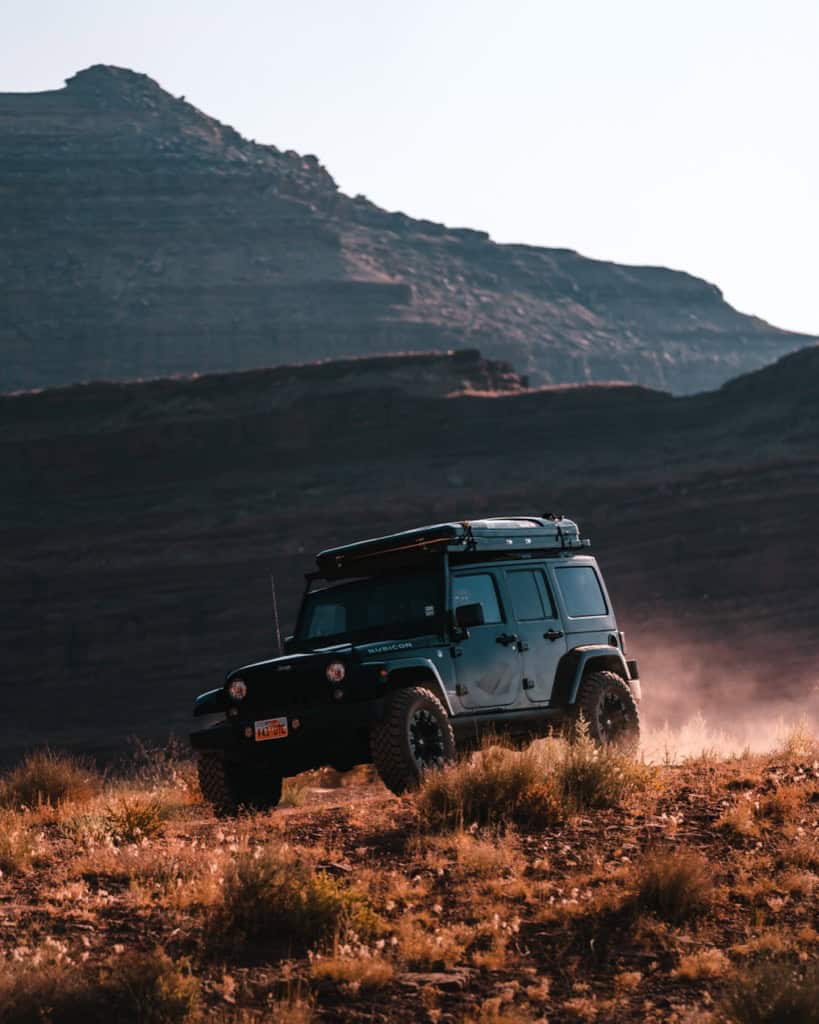
Front Runner. Three hours, drilling required. Step bit, vacuum, sealant, six holes. Worth doing yourself — the brackets are well-designed and the hardware is high quality. Here’s the full walkthrough video I recorded when I did mine:
For the full step-by-step writeup, see the dedicated install post: Front Runner Outfitters Slimline II Rack Installation.
Yakima. Two hours, no drilling. Track installation is straightforward but fiddly — getting the tracks aligned with the factory hardpoints requires patience. Once installed, the LockNLoad platform clamps to the tracks in 20 minutes.
Rhino-Rack. Three to four hours. Some drilling depending on the JK Backbone bracket configuration, and the Pioneer Platform itself ships unassembled, so you’ve got an Ikea-furniture-style afternoon ahead of you assembling the platform with the included hardware.
Hooke Road. Two hours. Bolts to existing hardtop holes plus a few self-drilling screws. The instructions are mediocre — plan to look at YouTube videos.
Pro tip across all of these: lay everything out on a tarp in the driveway before you start. Inventory the hardware. Make sure you have everything. Front Runner ships kits with 200+ pieces of hardware — losing one bolt down the storm drain ruins your weekend.
FAQ
What is the best roof rack for a 2-door Jeep Wrangler JK?
The Front Runner Slimline II Extreme kit for the 2-door JK is our pick. Choose the full-length kit (about $1,900-$2,100) if you plan to mount a rooftop tent, or the half-length kit (about $1,150-$1,400) for lighter cargo.
Do JK roof racks fit a Jeep Wrangler JL?
No. The JL (2018-present) has a different roof and hardtop, so you need a JL-specific rack. Front Runner, for example, sells separate Slimline II Extreme kits for the JL 2-door and JL 4-door.
What is the difference between a JK and JKU roof rack?
JKU is the 4-door JK Unlimited, which has a longer roof than the 2-door JK. Racks are sized for each, so buy the version that matches your doors. The JKU fits a longer tray and full-size rooftop tents more easily.
Do you have to drill to install a roof rack on a Jeep JK?
Not always — but the strongest racks (Front Runner, Hooke Road) require drilling six to eight holes through the hardtop. The Yakima RibCage and Rhino-Rack systems use factory hardtop hardpoints with no or minimal drilling. If you don’t want to drill, your real options are Yakima RibCage + LockNLoad or Rhino-Rack Pioneer with the JK Backbone.
What’s the weight capacity of a Jeep Wrangler JK roof rack?
Premium racks (Front Runner Slimline II, Rhino-Rack Pioneer 6) rate around 660 lbs static and 220 lbs dynamic. Yakima sits around 600 lbs static and 165 lbs dynamic. Budget cage racks like Hooke Road are 150 lbs static, 75 lbs dynamic. Always check the dynamic rating — that’s the one that matters for highway driving.
Can you put a rooftop tent on a Jeep Wrangler JK?
Yes — but only with a rack rated for it. The Front Runner Slimline II Extreme, Rhino-Rack Pioneer 6, and Yakima LockNLoad all support rooftop tents. Budget racks like Hooke Road do NOT have the static load rating to safely hold a tent plus occupants. For specific tent picks (hardshell wedges, clamshells, foldouts) tested and compared, see Best Rooftop Tents for Jeep Wrangler (2026).
How much does a good JK roof rack cost?
Budget: $300-400. Mid-tier: $1,000-1,400. Premium: $2,000-2,500. The price spread mostly comes down to material quality (aluminum vs. powder-coated steel), weight rating, and whether or not the rack is part of an accessory ecosystem.
Will a roof rack affect gas mileage?
Yes, slightly. On my JK Rubicon, the Front Runner Slimline II Extreme dropped me from 16 MPG to 15 MPG — about a 6% reduction. Bigger, taller racks (cage-style with high crossbars) hit MPG harder. Low-profile racks like the Slimline II are the most aerodynamic.
Can you keep the soft top with a roof rack?
Front Runner Slimline II Extreme works with the hardtop in place OR with no roof at all (Freedom Panels removed). The Yakima RibCage and Rhino-Rack JK Backbone both require the factory hardtop. None of them work over a soft top — the mounting hardware needs the hardtop or the bare frame as an anchor. Soft-top-only drivers should look at roll-bar-mounted baskets instead.
Front Runner Slimline II vs. Yakima RibCage — which is better for overlanding?
Front Runner. The dynamic weight rating, accessory ecosystem, and aluminum construction make it the more serious overlanding tool. Yakima is the better answer if you don’t want to drill or you switch between hardtop and soft top.
Does a roof rack void the Jeep warranty?
No, not by itself. Adding aftermarket equipment doesn’t void your warranty under federal law (Magnuson-Moss Warranty Act). What CAN cause a warranty issue is if a roof leak or hardtop damage is traced back to a poorly-installed rack — so install it correctly, use the supplied gaskets, and don’t forget the sealant.
Related posts
- Best Awning for Jeep Wrangler (2026): 270°, 180°, & Straight Side Awnings Compared
- Best Rooftop Tents for Jeep Wrangler (2026): Hardshell, Hybrid, & Softshell Compared
- Don’t Be Too Nervous to Drill Holes in Your JK Hardtop
- Front Runner Outfitters Slimline II Rack Installation
- Choosing a Rooftop Tent for Overland Camping
Closing thoughts
The right roof rack for your JK depends on three things: what you want to carry, how much you care about not drilling holes, and how serious you are about the overlanding lifestyle.
If you’re going to live with a rooftop tent and an awning and you don’t plan to sell the Jeep next year, buy the Front Runner Slimline II Extreme. You’ll have it forever and you’ll never regret the spend.
If drilling holes makes you nervous or you might sell the Jeep within five years, buy the Yakima RibCage + LockNLoad. The reversibility is worth the slight capacity hit.
If you want premium-tier capacity at a more reasonable price and you’re committed to your hardtop, buy the Rhino-Rack Pioneer 6 + JK Backbone. Genuinely the best value pick.
If you just need to carry a kayak twice a year, buy the Hooke Road and call it a day.
Want to try a Jeep with a Front Runner rack on it before committing $2,500? Book a rental with us at UT Overland — you’ll get to spend a weekend living with the rack, putting your gear on it, and seeing how it actually drives. Most of our customers who book a Jeep with a rooftop tent end up buying their own setup within a few months.
Recovery gear belongs on this rack. Mount your recovery boards and shovel to the platform you just built — see our Best Recovery Gear for Jeep Wrangler guide for the picks that pair best with a Jeep platform rack.
Plan the route before you go. A roof rack full of gear does you no good if you get lost in the backcountry. See our Best GPS Apps for Overlanding guide for the offline navigation apps every Wrangler owner should have installed before their first big trip.
Deciding between Front Runner and Yakima? Our dedicated Front Runner Slimline II vs Yakima LoadWarrior head-to-head covers modular platform vs cargo basket, install time, load capacity, and which is right for your build.
Adding LED lighting to your roof rack? Our Baja Designs S8 vs Squadron Pro comparison covers the LED bar vs LED pods decision for Jeep Wrangler lighting builds.
Deciding between LED brands? Our Baja Designs vs Vision X Offroad head-to-head covers pricing, product range, and community — the two premium LED brands for Jeep Wrangler builds.
Not building a rig? Rent one instead.
If you want the overland experience but don’t want to own a built-out Wrangler, Moterra Campervans rents luxury 4x4 Mercedes Sprinter vans out of 7 hubs across the U.S. — including Jackson (Grand Teton/Yellowstone), Whitefish (Glacier), SLC and Las Vegas (Utah’s Mighty 5), San Francisco (Yosemite), Seattle (Olympic/Rainier), and Portland ME (Acadia). Everything included: kitchen, heater, solar, pet-friendly. See our full Moterra review for the breakdown.